The Gentle Art of Letting Go

Updated: May 11
Relaxation Tips & Techniques for Older Adults
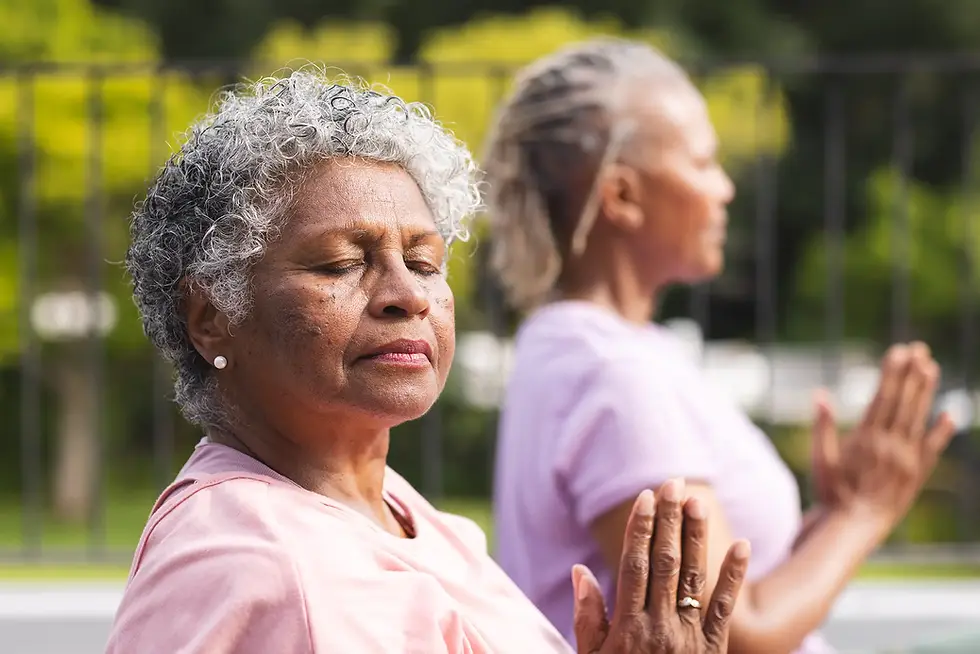
Getting older brings wisdom - but it can also bring a body that holds tension a little tighter. The good news? Relaxation is a skill, and like any skill, it gets better with the right practice. The techniques below are gentle, effective, and designed with older adults in mind. No special equipment, no gym membership - just you, your breath, and a few minutes of intention.
Technique 1
Diaphragmatic Breathing
Most of us breathe shallowly into our chests, especially when stressed. Deep belly breathing activates the parasympathetic nervous system - your body’s built-in relaxation response - within just a few breaths. Sit comfortably in a supportive chair or lie on your back with your knees slightly bent. Place one hand on your belly and one on your chest. Breathe in slowly through your nose for a count of 4, letting your belly rise while your chest stays relatively still. Pause gently for a count of 2, then exhale fully through your mouth for a count of 6, feeling your belly fall and your shoulders drop. Repeat 6 to 8 times. Try this first thing in the morning, before bed, or any time you feel stress creeping in - even three or four cycles can make a noticeable difference.
Technique 2
Progressive Muscle Relaxation
Progressive muscle relaxation works by deliberately tensing and then releasing muscle groups throughout the body. This contrast helps you recognize - and then deeply release - tension you may not have even realized you were holding. Starting at your feet and working upward through your calves, thighs, hands, arms, shoulders, and face, gently tense each group for about 5 seconds, then release for 20 to 30 seconds while breathing slowly. The release after each contraction creates a wave of relaxation that accumulates beautifully across the full sequence. For those with arthritis or joint pain, simply skip any areas that feel uncomfortable - even a partial practice is wonderfully beneficial.
Technique 3
Gentle Mindful Movement
Relaxation doesn’t always mean stillness. For many older adults, gentle movement is one of the most effective ways to release physical and emotional tension - the key word being gentle. Chair yoga offers seated stretches that improve flexibility and calm without any balance concerns. Tai chi combines slow, flowing movements with relaxation and gentle strengthening in one meditative practice. Warm water therapy - movement in a heated pool - reduces joint pain and invites a deep relaxation response that is hard to match on land. Even a 10-minute seated stretch session while listening to calming music can shift your nervous system from alert to at ease. The goal is presence, not performance.
Technique 4
Guided Imagery
The mind is a powerful tool for relaxation. Guided imagery involves closing your eyes and mentally visiting a peaceful place - a warm beach, a quiet garden, a beloved childhood spot. Vividly imagining the sights, sounds, smells, and textures of that place can slow your heart rate and ease muscle tension as effectively as some medications, and without any side effects. Pair a guided imagery session with a warm herbal tea, a soft blanket, and 15 minutes of uninterrupted quiet, and it becomes a ritual your body begins to look forward to. If imagery feels abstract, try sensory grounding instead: notice 5 things you can see, 4 you can touch, 3 you can hear, 2 you can smell, and 1 you can taste. This gentle inventory pulls attention out of anxious thought loops and back into the present moment.
Start With One Thing
Start with one technique. Practice it for a week. Notice how you feel. Relaxation compounds over time - the body learns, the nervous system softens, and what once took effort gradually becomes a natural way of moving through your days with more ease, more spaciousness, and a great deal more joy. Want to learn how to incorporate these relaxation techniques safely into your routine? Get in touch with Mindful Mobility - I'd love to help you move better, every day.
